


Features — support coordination
Support coordination without the side spreadsheet.
Log the contact once. The time draws down the participant’s funded hours, the note lands on their record, and the claim line is ready at the end of the period.
Time against the plan
Coordination time, tracked against the hours that fund it.
Support coordination is funded in hours, so the unit of record is the hour — who spent it, on which participant, and how much of the funded amount is left afterwards.
Log as you go
Record the contact and its duration when it happens — a call, a meeting, a report. Ten minutes on the phone is ten minutes logged, not a guess at the end of the month.
Drawn down as it lands
Each entry draws down the participant’s funded coordination hours, so hours used and hours remaining are facts on the record — not a reconstruction at claim time.
One record per participant
Every coordinator’s time lands on the same participant record. Two people supporting one participant is one running balance, not two spreadsheets.
Case notes
The note lives where the contact happened.
A case note written at the time of the contact attaches to the participant record then and there — not reconstructed on Friday from a notebook and a call log. When someone later asks what was done and why, the answer is on the record with a date on it.
- Attached to the participant record at the time of the contact — dated and attributed
- Sits alongside the participant’s shifts, documents and claim history, not in a separate notebook
- Behind it, an append-only audit log nobody can rewrite — including an owner, and including us
From time to claim
Logged time becomes claim lines. No spreadsheet between.
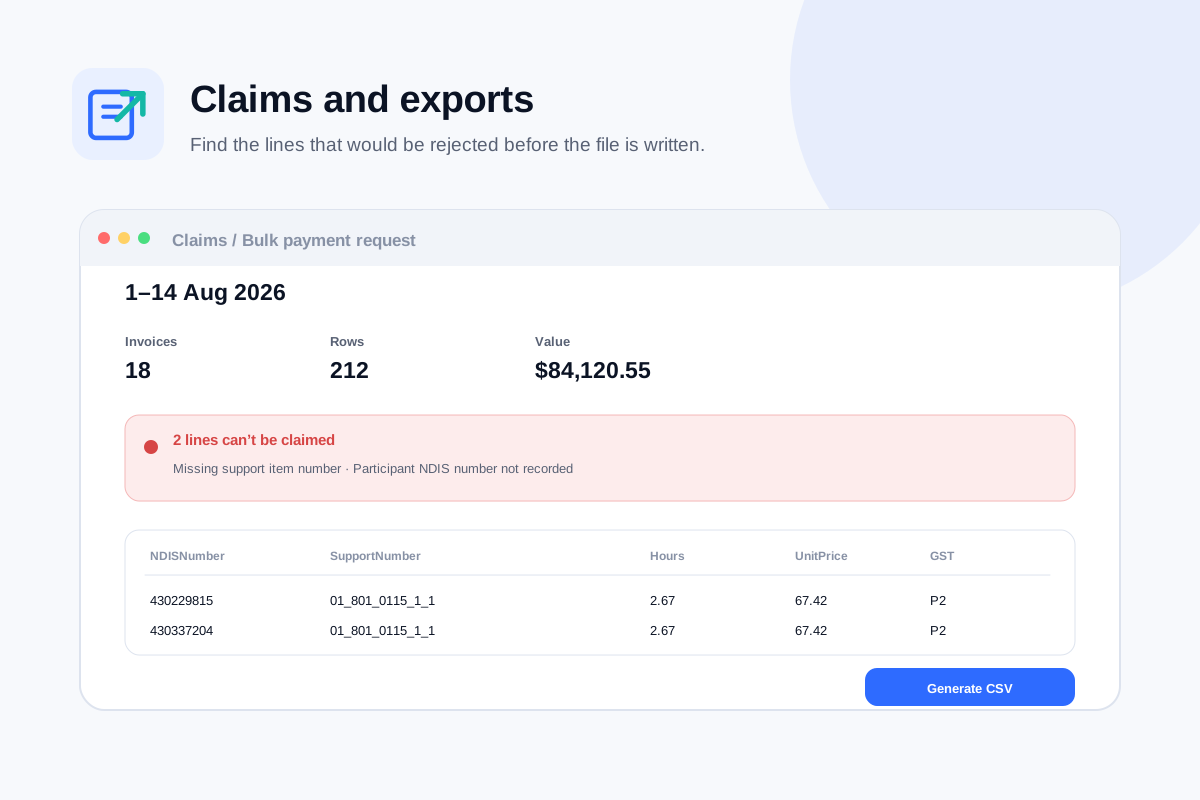
At the end of the period, the time you logged is the claim. Each line carries the support it was delivered under and prices from the date-effective price book, checked against the participant’s plan before a file is written.
- NDIA bulk payment request files generated from the logged time
- Problems listed line by line before the file is written — not decoded from a rejection later
- CSV, Xero, MYOB and QuickBooks exports in every tier
Rates change; the price book is date-effective, so time is priced by the date it was delivered — see price configuration.
Remaining budget
See what’s left before you commit more hours.
The worst time to discover a coordination budget is exhausted is after the work is done. The participant record shows the remaining funded hours before you book the next meeting, and the same checks that guard rostered shifts guard coordination time.
- Hours funded, used and remaining, visible on the participant record
- An exhausted budget or an expired plan is flagged before more time goes against it
- Supports are picked by name and priced from the price book — no item numbers or rates to remember
Get started
Log the contact once. Claim it without the spreadsheet.
Support coordination ships in every tier, including the free one — every module, free forever for up to 5 users.
Free forever for up to 5 users. No credit card, no trial clock.