


Features — allied health
Appointments, groups and meetings. One calendar.
For allied health teams delivering NDIS supports: a single calendar that knows each therapist’s availability and travel time, runs the conflict checks before a booking saves, and shares its week and month views with the roster.
One view
If it takes a clinician’s time, it is on this calendar.
An allied health week splits a calendar three ways — appointments in one tool, groups in a spreadsheet, meetings in email invitations. Nexrosta keeps all three on one surface, which is what makes the conflict checks possible.
Everything that books time
One-to-one appointments, group sessions and care team meetings sit on the same calendar. A gap on screen is a real gap, because nothing is hiding in a second system.
Groups without the workaround
A group session is one booking with its participants attached — not the same hour typed into four individual calendars and hoped into agreement.
Meetings beside the billable work
Case conferences and handovers occupy calendar time like anything else, so a therapist is never double-booked by a meeting the calendar could not see.
Meetings deserve more than a calendar slot — agendas, outcome notes and assigned actions are covered in care team meetings.
Availability and travel
The day as it will actually run.
Allied health happens in clinics, homes, schools and the community. A calendar that ignores the drive between them books days nobody can deliver — the shortfall just surfaces later, as lateness.
- A therapist’s availability is on the calendar, so you book into it rather than around it
- Travel time between participants is blocked out, so back-to-back bookings across town are visible before they happen
- Approved leave sits on the calendar too — and is one of the checks that runs before a booking saves
Travel time is honest time
Blocking travel between home visits makes a therapist’s day look fuller on screen — because it is fuller. A calendar that shows six deliverable appointments is more useful than one that shows eight and delivers six.
Conflict checks
Checked before it saves, not discovered on the day.
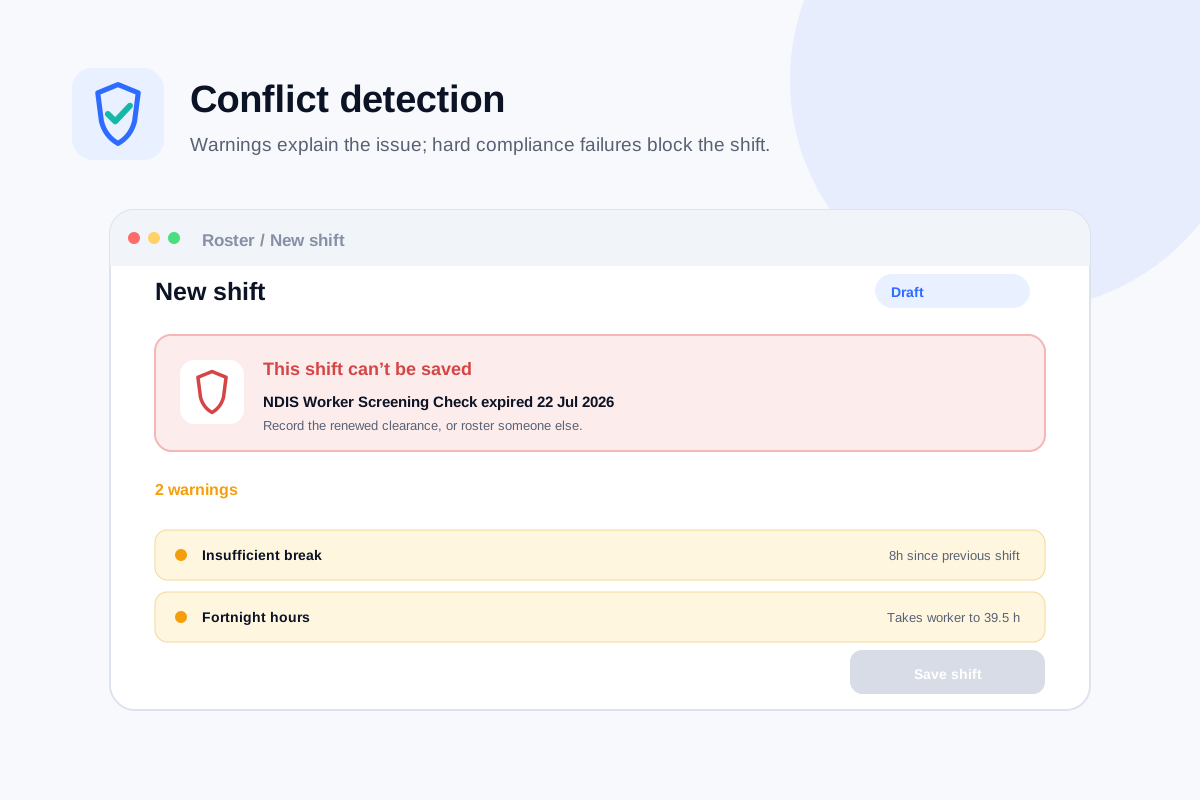
The same fourteen checks that guard the roster run every time a booking is created, moved or edited. Most raise a warning a coordinator can weigh up — a booking over approved leave, outside availability, overlapping another commitment. An expired NDIS Worker Screening Check blocks the booking outright.
A conflict found while booking costs a moment. The same conflict found on the day costs a participant their session.
Shared with the roster
The calendar is the roster, at a different angle.
Week and month views are the same views the roster uses. A team that delivers both therapy and support work sees the whole picture in one place — and never reconciles two calendars that have quietly drifted apart.
- The calendar and the roster are one dataset — there is no second copy to reconcile
- Therapy appointments and support shifts appear together in the week and month views
- What a therapist sees in the app is the published calendar, not a screenshot of it
The rostering side — templates, drag-and-drop, publishing to the app — is on the rostering page.
Why one dataset matters
Two calendars means two versions of the truth, and the difference between them is where missed appointments live. When the booking a coordinator makes is the entry a therapist clocks into, there is nothing to sync, export or cross-check — the view is the record.
Related
Get started
Book a week the team can actually deliver.
Add your therapists and participants, set availability, and put the first appointments on the calendar. The checks run from the first booking.
Free forever for up to 5 users. No credit card, no trial clock.